
Read the recipe before turning on the hob
Read the recipe from beginning to end. Note what needs chopping, which seasonings need mixing, any waiting time, and the order of cooking. If an ingredient is missing, decide on a substitute before you begin—not when the pan is already hot.
Place the ingredients you will use in one area and group them by step. There is no need to empty every cupboard onto the counter. A compact arrangement is easier to clean and helps you see what is still missing.
Give the counter clear work zones
Set aside areas for washing, cutting, and ingredients that are ready to cook. Keep raw ingredients separate from ready-to-eat food, and use a separate place for peels, stems, or trimmings. Keep frequently used tools within reach without filling the whole counter.
When you finish with a tool, clean it or place it in a designated area before moving on. This small habit makes the process easier to follow, especially when several people share the kitchen.
Choose a tool for the task
A knife can cut ingredients to size, a peeler removes skins from suitable produce, and a grater creates a finer texture. Choose the tool that matches the ingredient and result you want. One versatile tool may be enough for a simple task; a specialised tool can help with a particular texture.
There is no need to set out every tool you own. Choose a few for the recipe, place them safely, and put them away when finished. Use a stable cutting board and a comfortable technique; keep fingers clear of the blade path.
| Task | Common tool | Consider |
|---|---|---|
| Peeling | Peeler or small knife | Ingredient shape and a comfortable grip |
| Chopping | Knife and stable board | The cut size required by the recipe |
| Grating | Grater | Texture and ingredient quantity |
| Serving | Serving spoon or tongs | How you will lift and move the dish |
Plan the order so each ingredient is ready
Begin with the task that takes the longest or an ingredient that needs to rest. Continue with the next preparation step only when it is safe and does not overcrowd the work area. Follow the timing and temperature in the recipe, adjusting for the equipment you use.
When cooking together, assign clear roles: one person washes, one prepares ingredients, and another sets the table. Let each other know when something is ready. Simple communication prevents duplicated work and helps everyone see what comes next.
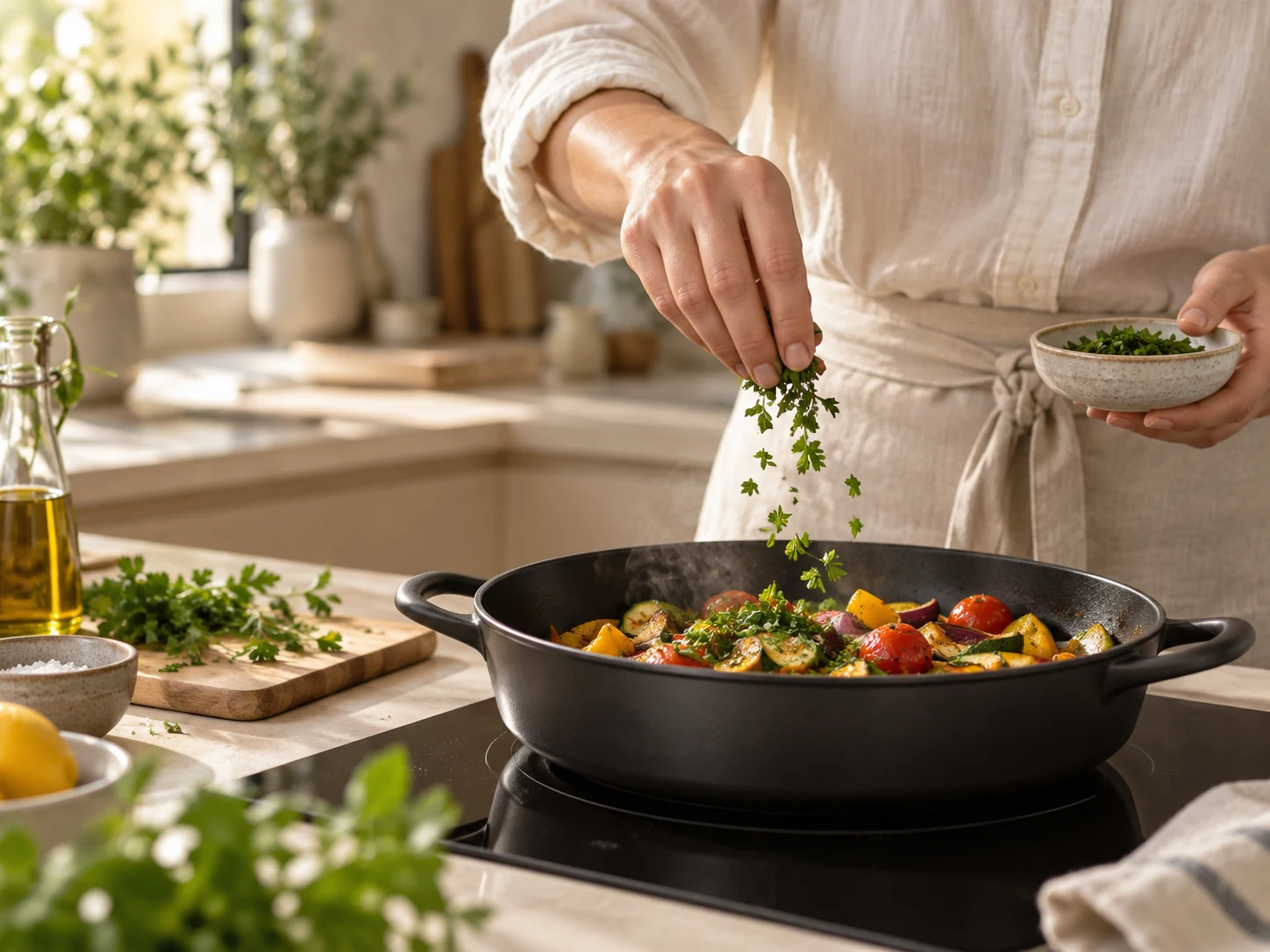
Try it at home
Try one more organised prep session
For your next meal, write the steps on a note, set out only the tools you need, and keep one bowl for trimmings. When you are done, note what helped most and repeat it with the next recipe.
Explore food preparation toolsQuick answers
Frequently asked questions
Should every ingredient be cut before cooking?
Follow the recipe order. Preparing ahead can help, but some ingredients may need to be handled just before use.
How can we divide tasks when cooking together?
Assign clear steps—washing, preparing ingredients, cooking, and setting the table—and say when each part is ready.
What should I set out on the counter?
Start with the tools and ingredients named in the recipe. Leave some clear space for moving ingredients and cleaning.